
Spreading the Legacy of Sumo
Worldwide as the Leading
Manufacturer of Sumo Mawashi
Sanpuku Shoji’s mawashi (loincloth) has been loved by sumo enthusiasts nationwide, from middle school, high school and university players to all sumo wrestlers of the Japan Sumo Association. As its leading manufacturer, we aim to spread the national sport by offering a range of sumo-related products.
Sanpuku’s Origins: Our Journey with Sumo
Early Years
Early Years
1885 - 1898

Where It All Began
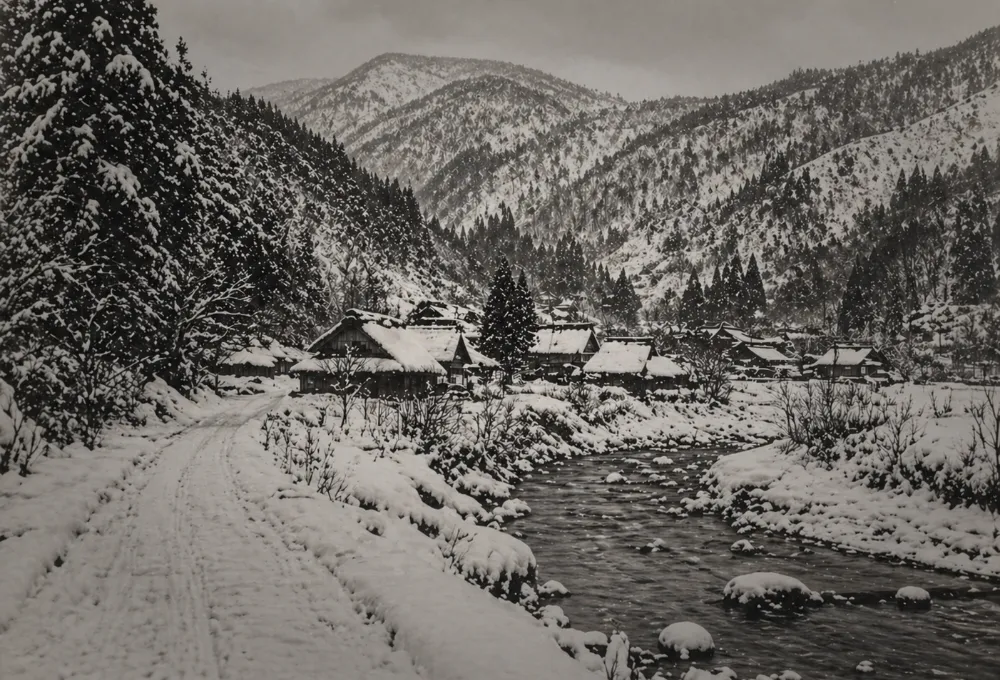
At the foot of Mt. Kurikoma, on the border of Akita and Miyagi,
lies the remote, snowy village of Hanayamamura.
It was here, in 1885,
that Yujiro Sugawara was born as the second son of a farmer.
From an early age, he loved sumo dearly.
While helping with farmwork,
Yujiro poured his heart into the local children’s sumo,
with a passion that would later shape his life.
His hometown, Hanayamamura, now rests beneath Lake Hanayama.
After graduating elementary school, Yujiro set off to Sendai on foot,
carrying only three 10-sen coins and the determination to survive.
He was taken in by a kimono wholesaler
in Sendai and began working as an apprentice.
By day, he worked hard;
by night, he attended night school, thanks to his master’s kindness.
Those days of learning amid hardship became the foundation of Yujiro’s life.
Formative Years
Formative Years
1899 - 1913

Tokyo and the Founding
In 1899, he relocated to Tokyo.
He joined Suzuki Shoko,
a long-established textile wholesaler,
where his tireless work ethic and friendly nature earned
the trust of others.
Eventually, he became the store’s head clerk
and its defining figure.
In 1913, Yujiro became independent
and established “Sugawara Kogyo” in Kanda Konyacho.
His bold and generous spirit won people over,
and before long, his business flourished.
Yet all this time, “sumo” remained Yujiro’s passion,
and he began designing and selling sumo mawashi.
He became closely involved with many sumo-related
organizations such as the Japan Sumo Association
and was granted free access (“kido-gomen”)
to the world of professional sumo.
For Yujiro, nothing brought greater joy
or pride than a life with sumo.
Pivotal Years
Pivotal Years
1913 - 1950
The Challenge and to the Next Era
But times changed drastically.
War. Defeat. Social upheaval.
Yujiro’s compassionate nature,
once his greatest strength, came at a cost.
Gradually, Sugawara Kogyo fell into hardship.
It also began losing ground in the sumo mawashi market.
The person who would turn things around was Etsuzo Sugawara
(his daughter Hiroko’s husband and adopted son-in-law).
Etsuzo joined Sugawara Kogyo in 1947.
In 1950, he started “Sanpuku Shoten”
(now Sanpuku Shoji Co., Ltd.) to lead the company into a new era.
The name, “Sanpuku” (three blessings) reflected Yujiro’s wish
that the company, all suppliers, and customers involved in business
would all prosper together.
Etsuzo’s independence was not due to conflict or division.
Instead, Yujiro warmly supported Etsuzo’s challenge.
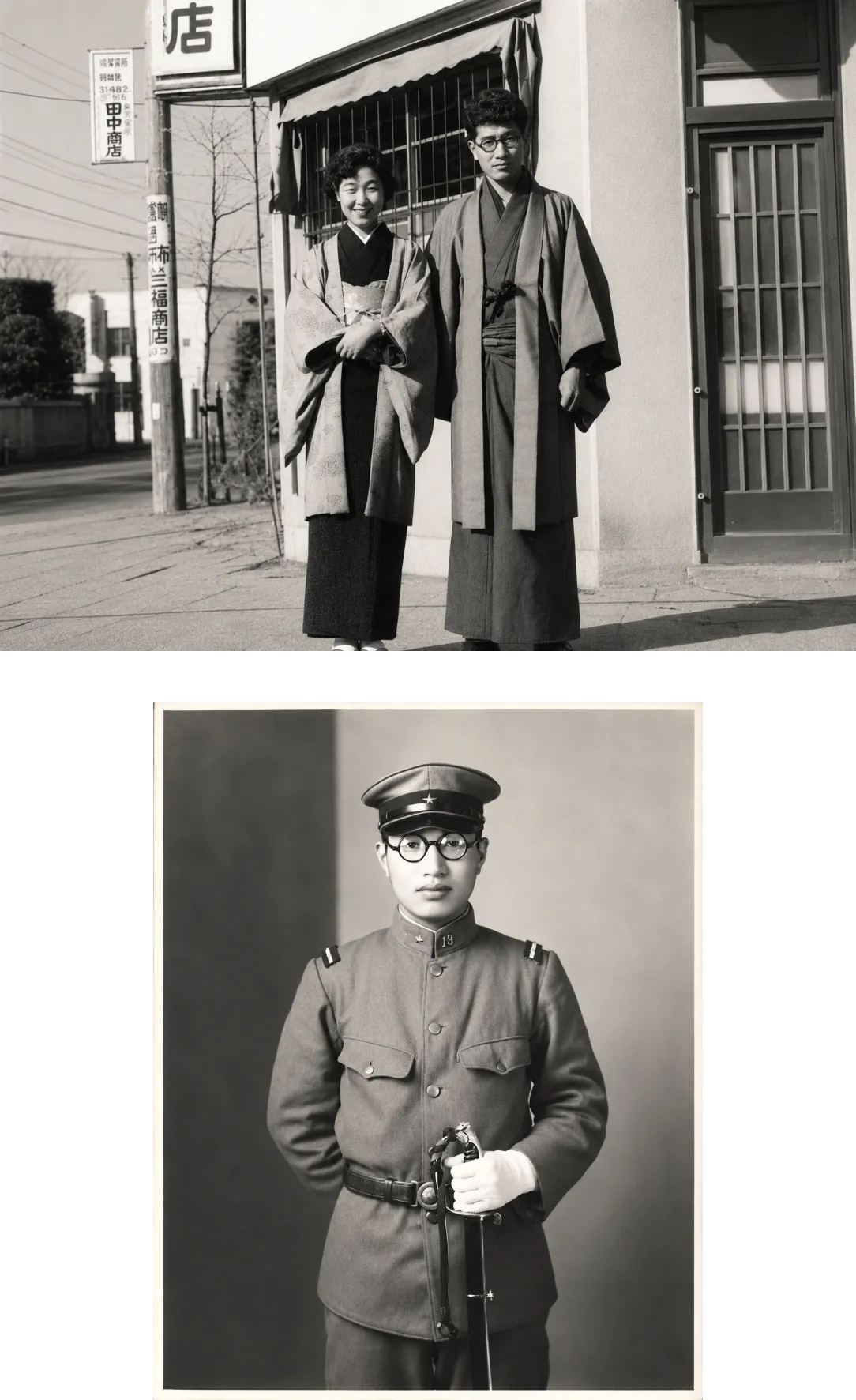
in the Imperial Japanese Army from 1942
in Manchuria back then. From 1944 onward,
he served in Mindanao, Philippines,
where he took on the demanding responsibilities
of caring for military horses and dogs,
to prevent disease, and managing the horseshoeing.
Expansion
Expansion
1950 - 2025
Carrying On the Tradition

At the time, Etsuzo had a young child
and a wife expecting another.
It was not the best moment to start a business.
Winter in Tokyo.
Every day, he rode his scooter through the cold to visit customers.
“This cold is nothing compared to the battlefield,” he would say.
And so he kept on going.
In time, Sanpuku restored its business with
the Japan Sumo Association
and once again expanded its sales network
for sumo mawashi across Japan.
What had nearly been lost was won back through persistence
and hard work.
Those efforts became the foundation of Sanpuku.
Since then, Sanpuku has continued to support the world
of sumo—not only by providing sumo equipment,
but also by contributing to the development
of the sport through projects such
as the creation of indoor dohyo.
Today, as sumo attracts growing interest around the world,
people travel from overseas
to Sanpuku in search of authentic mawashi.
What began as a youth’s love of sumo
has been passed down through generations
and beyond Japan’s borders.
Today, our challenge is to strengthen the manufacturing system
so that this tradition can continue into the future.
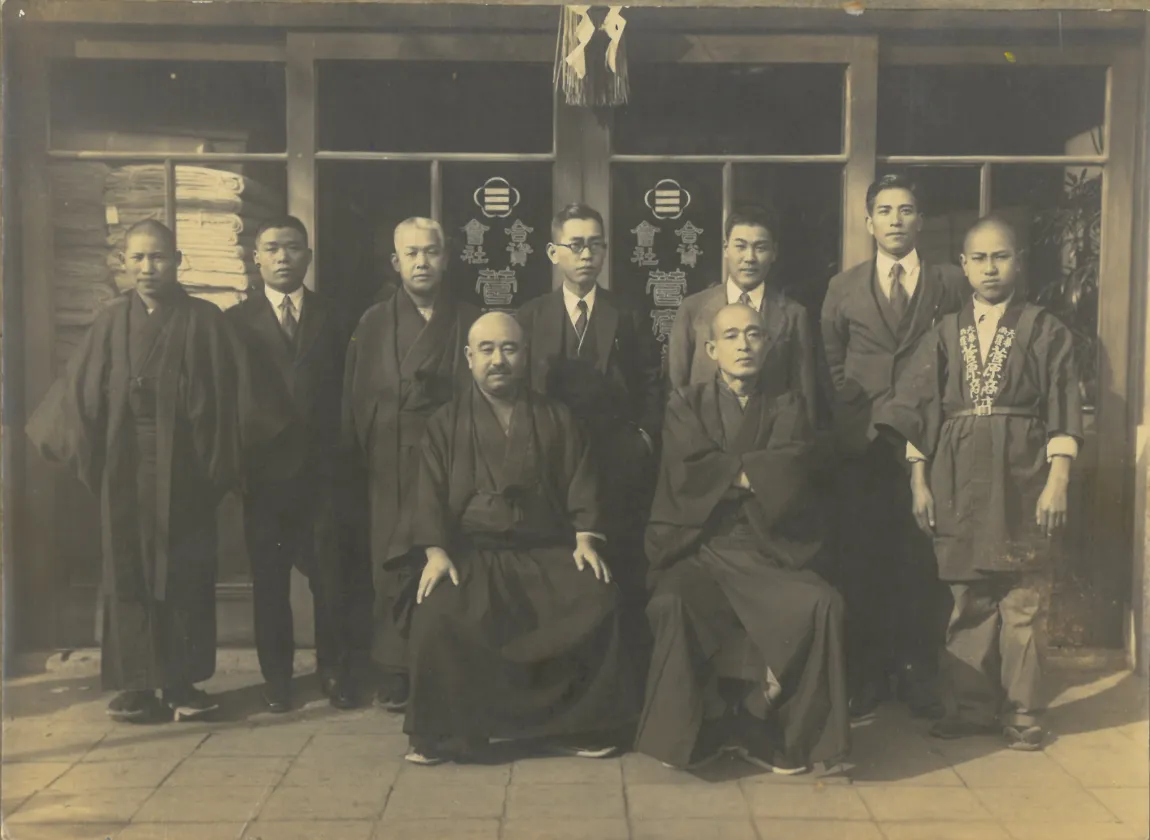
Yujiro Sugawara spent his later years in Kanda, Tokyo.
He passed away on July 14, 1959,
at the age of seventy-four, surrounded by family.
His life was never easy.
Yet his values and determination remain
at the heart of Sanpuku today.
 1959
1959
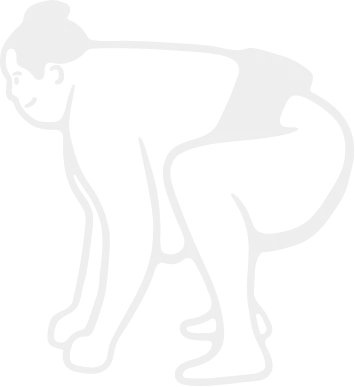
In 2025, the Japan Sumo Association celebrated its centennial.
On this memorable occasion,
Sanpuku was honored to be invited to take part.
It all began with a young boy’s love of sumo.
With three 10-sen coins in his hand, he set out on a journey.
His determination endured through every hardship.
More than a century later, that journey continues,
as Yujiro’s unwavering spirit shapes the world of sumo.
SERVICE
-
Variations of Sumo Mawashi
(for sumo wrestlers~children) -
Indoor Dohyo
-
Pants for Sumo
‘Mighty Pants’ -
Easy Tawara
-
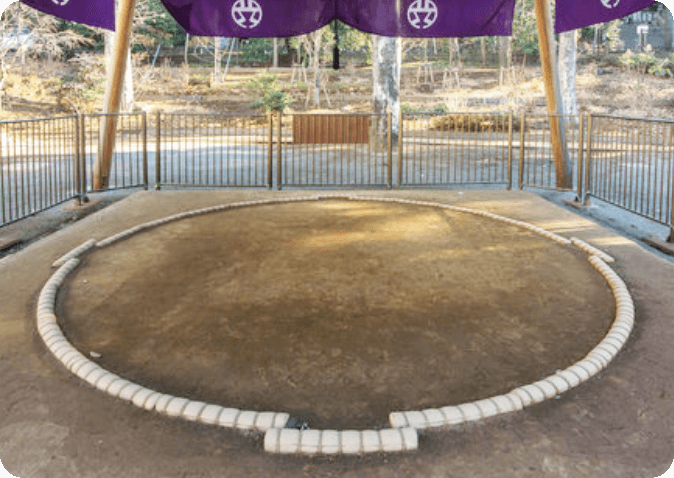
Main Ring Construction
-
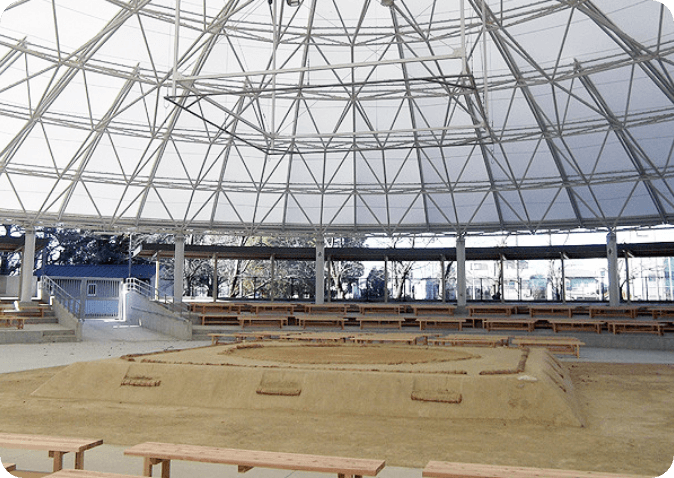
Sumo Arena Tent

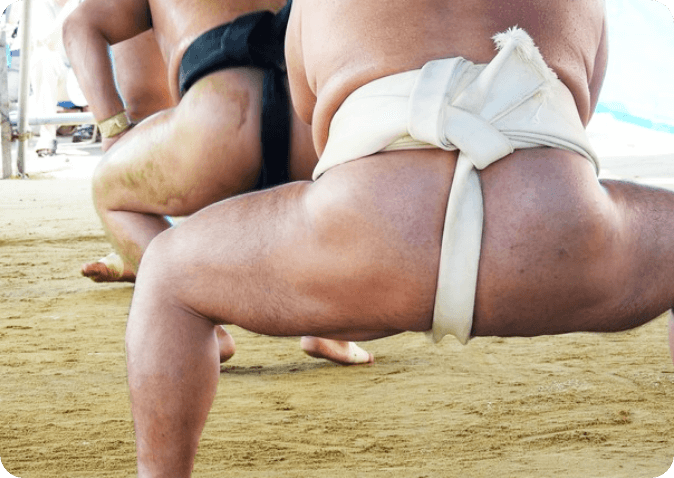
Variations of Sumo Mawashi
(For Sumo Wrestlers~Children)
Elementary school players to sumo wrestlers, mawashi for
training, students, and makushita division sumo wrestlers.
From Size 4 for children to Special Size 1 for Yokozuna, we offer mawashi standardized to suit various ages and physical levels, allowing users to choose the one that best meets their needs. Having supplied the Japan Sumo Association and Japan Sumo Federation for over a century, we take pride in our reliable track record and quality products.
| Price Chart | |||
| Types | Specifications (Width×Length) |
Price (1 Piece) (Tax Included) |
Price (Sold in 1m-Increments and Cut to Order) (Tax Included) |
| Special Size 1 For Teachers | 47cm×6.5m | 20,020 yen | 3,630 yen |
| Special Size 1 Black/td> | 47cm×6.5m | 27,885 yen | 4,950 yen |
| Size 1 For Sumo Wrestlers | 46cm×6m | 16,500 yen | 3,190 yen |
| Size 1 Black | 46cm×6m | 21,450 yen | 4,125 yen |
| Size 2 For General Use | 46cm×6m | 14,454 yen | 2,805 yen |
| Size 3 For Middle School Players |
46cm×6m | 11,880 yen | 2,255 yen |
| Size 40 For Upper-Grade Elementary School Players |
45cm×6m | 6,930 yen | 1,309 yen |
| Size 4 For Elementary School Players |
2 Layers×5m | 2,530 yen | |
| Size 4 For Elementary School Players |
2 Layers×6m | 2,860 yen | |
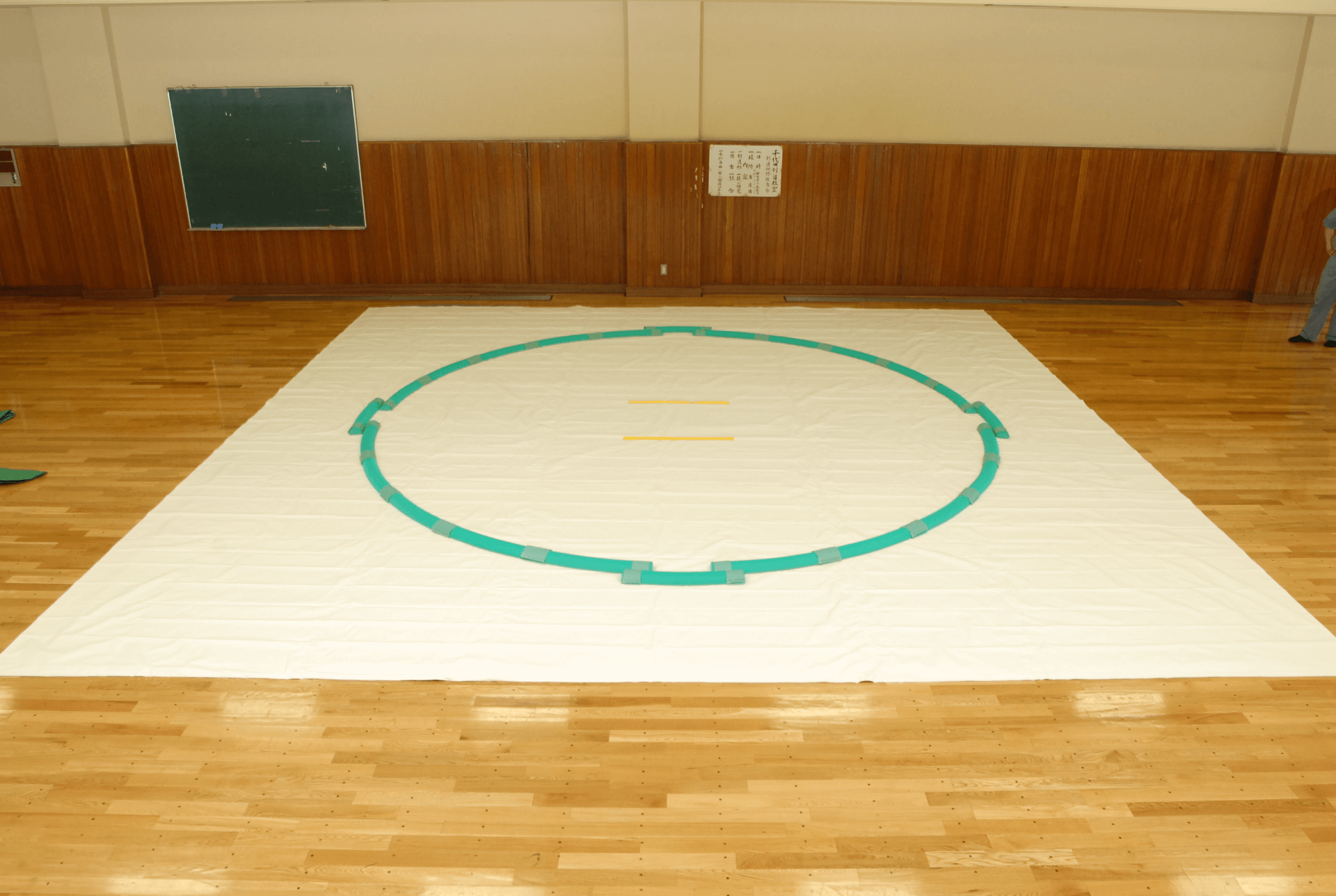
Indoor Dohyo (Ring)
This item is easy to transport, store, assemble, and disassemble, no matter the weather, while still resembling a real dohyo. It overcomes the constraints that a traditional dohyo may impose on the promotion of sumo.
Certified by the Japan Sumo Federation, they are distributed as promotional material to sumo federations nationwide. They are also used by municipal boards of education, public sports facilities, and regional qualifiers for children’s sumo contests hosted by the Junior Chamber.
Feel free to contact us for rental services as well.
| Price Chart | |||||
| Product Name | Specification | Color | Dimensions (In Packed State) |
Weight | Price (Tax Included) |
| Dohyo Main Sheet (With Storage Bag) |
Length 6.7m × Width 6.7m |
Ivory | Length 93cm Width 40cm Height 16cm |
30kg×1 Sheet 30kg | 440,000 yen |
| Light-Weight Tawara (With Storage Bag) |
Polyethylene Tawara with Tokudawara |
Green | Length 70cm Width 45cm Height 31cm |
5kg×1 Piece 5kg | |
| Felt Underlay (With Storage Bag) ※1 |
Thickness 10mm | Diameter 25cm Length 1.5m |
13kg×4 Sheets 52kg | 88,000 yen | |
| Total | 87kg | 528,000 yen | |||
※1 We do not ship overseas.
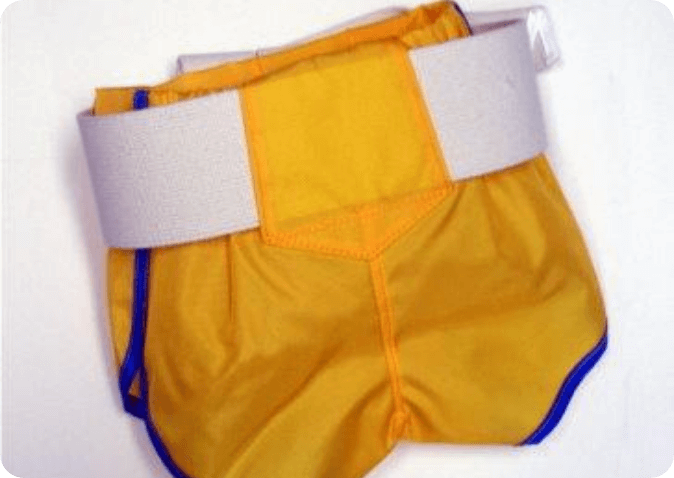
Pants for Sumo ‘Mighty Pants’
‘Mighty Pants’ was produced so that everyone can enjoy sumo, regardless of age or gender. It offers a simple solution for the issue of wrapping mawashi (a skill not so widely known) in sumo tournaments. It can also be worn over regular clothing for efficiency.
| For Children | |||||
| Size Classification | Size | Price (Tax Included) |
|||
| Classification | Suited Age Range | Color | Height | Weight | |
| S | 6~7 | Yellow | 120cm | 52cm | 4,290 yen |
| M | 8~10 | Blue | 140cm | 58cm | 4,400 yen |
| L | 11~13 | Green | 150cm | 62cm | 4,730 yen |
| LL | 13~14 | White | 160cm | 72cm | 5,280 yen |
| For General Use | |||||
| Classification | Size | Price (Tax Included) | |||
| Length | Weight | ||||
| M | 31cm | 80cm | 6,380 yen | ||
| L | 34cm | 92cm | 6,820 yen | ||
| LL | 37cm | 104cm | 7,590 yen | ||
| XL | 47cm | 116cm | 8,580 yen | ||
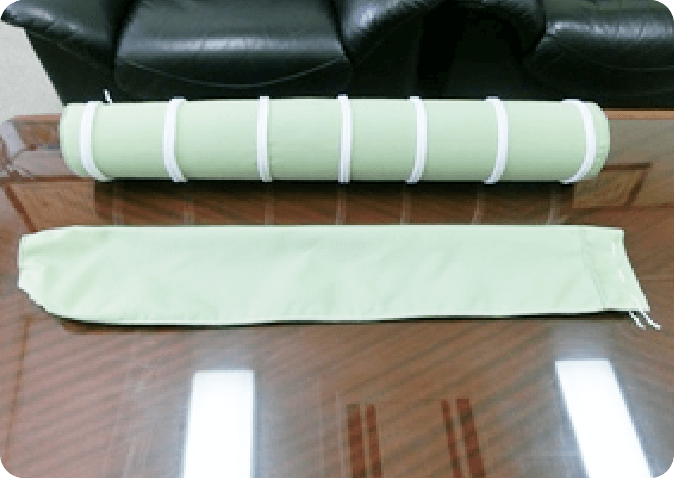
Easy Tawara
1 set includes 24 pieces: 20 uchidawara (inner straw bales) and 4 tokudawara (special straw bales) and comes with tying ropes. A dohyo can be assembled with relative ease.
Highly durable, it can last for several years, even in rain and dew. Made from polyester canvas, it lasts 20 times longer than straw and is also dyed to look like genuine straw.
| For General Use | ||
| Type | Price (Tax Included) | |
| Easy Tawara 1 Set | 56,100 yen | |
| Easy Tawara Sold Individually | 2,860 yen | |
| Easy Tawara New Type with Cushioning Material (Certified Product of Japan Sumo Federation) 24 Pieces in a Set | 75,900 yen | |
| Easy Tawara New Type with Cushioning Material Sold Individually | 3,740 yen | |
CONSTRUCUTION WORK
Main Ring Construction
We also handle ring (dohyo) construction, including both the creation of new rings and repair work of existing ones. ※Please contact us for pricing details.
Construction Examples
Adachi Shinden High School Tokyo Medical University Rikkyo University Ichikawa Gakuen Ohtawara City Sumo Arena
Sumo Arena Tent
We design and construct tents for sumo arenas.
※Please contact us for pricing details.
Construction Example
Ohtawara City Sumo Arena
Frequently Asked Questions
- How do you purchase a mawashi?
- 1. Visit Us for a Direct Purchase
Our hours are 8:30 AM to 12:00 PM and 1:00 PM to 5:00 PM (except Saturdays, Sundays, and holidays). ※Please check stock availability in advance.
2. Order by Telephone
Call us between 8:30 AM to 12:00 PM and 1:00 PM to 5:00 PM (except Saturdays, Sundays, and holidays). Shipping is arranged with cash on delivery, and please note that we charge an additional shipping fee.
3. Order Online
Orders can be made using the Inquiry Form on our website as well. - Do you accept credit cards?
- We only take cash payments. We apologize for the inconvenience.
- Can mawashi be dyed?
- Dyed mawashi are available in only Special Size 1 and Size 1 Black. Although it is technically possible to dye mawashi as they are 100% cotton, we do not accept orders for dyeing them in other colors.
- Is there a starch coating on a new mawashi?
- A freshly-woven mawashi may feel stiff but no starch is applied to them. If you are unsure of the required length, please provide us with your waist measurement along with your height and weight so that we can suggest the required amount of length in meters.